Web Technologies Trends: Future-Proof Your Skills Now
Published: 9 Feb 2026
Imagine a magical world where you can talk to friends across the ocean, watch your favorite cartoons, play exciting games, and learn about dinosaurs, all with just a click! That’s the amazing power of web technologies. Every time you open a website like YouTube, Google, or your school’s learning page, you’re using special tools that connect computers around the world. Think of the internet as a giant spider web, and web technologies are the invisible threads that hold everything together.
HTML helps build web pages like building blocks, CSS makes them colorful and beautiful like painting a picture, and JavaScript makes things move and respond when you click, almost like magic! From watching videos on your tablet to video calling grandma, web technologies make our digital world fun, friendly, and full of endless possibilities. You use these amazing tools every single day, and who knows? Maybe one day you’ll create the next big website that millions of people will love!
What Are Web Technologies? A Complete Beginner’s Guide
Web technologies are the special tools and languages that make websites and apps work on the internet. Think of them like the ingredients in your favorite recipe. Just like you need flour, sugar, and eggs to bake a cake, you need different technologies to build a website! When you visit YouTube to watch videos, play games on Roblox, or search for homework help on Google, you’re using web technologies without even knowing it.
There are two main parts to web technologies. The first part is called the frontend, which is everything you can see and touch on a screen, like colorful buttons, fun pictures, and cool animations. The second part is the backend, which is like the kitchen in a restaurant. You don’t see it, but that’s where all the cooking happens! The backend stores your information, remembers your login, and makes sure everything works smoothly.
The Building Blocks of Every Website
The three most important tools are HTML, CSS, and JavaScript. HTML creates the structure of a webpage, just like the frame of a house. It tells the computer where to put text, pictures, and videos. CSS makes everything look beautiful by adding colors, fonts, and designs, like decorating your room with posters and paint. JavaScript brings websites to life by making things move, change, and respond when you click buttons or type messages.
How Websites Talk to Each Other
Websites need to communicate with computers called servers that store all the information. When you type something into Google or click a video on YouTube, your computer sends a message to a server asking for that information. The server then sends it back to you in seconds! This communication happens through something called HTTP, which is like a special language that computers use to understand each other and share information across the internet.
Frontend vs Backend Technologies: Understanding the Difference
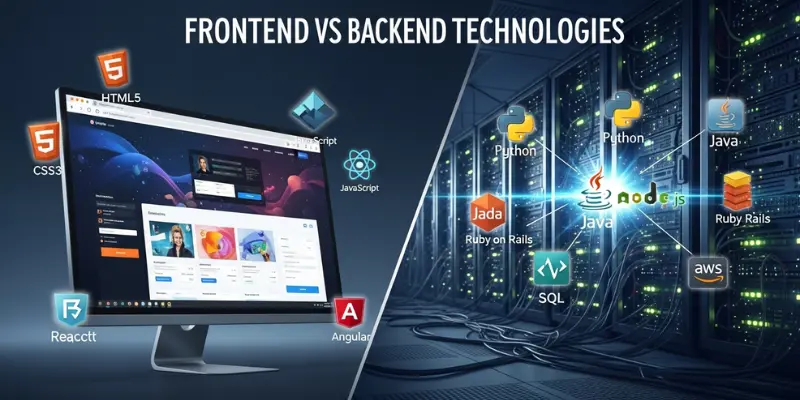
Understanding the difference between frontend and backend technologies is like knowing the difference between what happens on stage during a play and what happens behind the curtains. Both parts are equally important, and they work together to create the websites and apps you use every day.
What is Frontend Technology?
Frontend technology is everything you see, click, and interact with on a website. It’s the part that lives in your web browser, like Chrome, Safari, or Firefox. When you see colorful buttons on Amazon, watch videos on YouTube, or play games on your tablet, you’re experiencing the frontend. The three main tools that create the frontend are HTML (which builds the structure), CSS (which adds colors and styles), and JavaScript (which makes things move and respond). Frontend developers are like artists and designers who make sure websites look beautiful and are easy to use on your computer, phone, or tablet.
What is Backend Technology?
Backend technology is the invisible part of a website that works behind the scenes, like the engine in a car. You can’t see it, but without it, nothing would work! The backend is where all your information gets stored and processed. When you log into Google Classroom, send a message, or save your game progress, the backend remembers everything. It uses powerful computers called servers and special languages like Python, PHP, and Node.js to store data in databases. Backend developers are like the mechanics who make sure everything runs smoothly, keep your passwords safe, and deliver the right information when you need it.
How They Work Together
Frontend and backend technologies are best friends that need each other to work. Think of ordering pizza online. The frontend is the website where you pick your toppings and see yummy pictures. The backend remembers your address, processes your payment, and sends your order to the pizza shop. Together, they create the complete digital experience that makes the internet so amazing and useful for learning, playing, and connecting with people all around the world!
Top Frontend Frameworks in 2026 (React, Vue, Angular Compared)
Choosing the right frontend framework is an important decision for any web developer. React, Vue, and Angular are the three most popular frameworks in 2026, each offering unique strengths that make them suitable for different types of projects.
React: The Popular Choice
React, created by Meta (formerly Facebook), remains the most widely used frontend framework. Its component-based architecture allows developers to build reusable UI elements like building blocks. Major companies, including Netflix, Instagram, and Airbnb,b rely on React for their platforms. React’s flexibility and vast ecosystem of libraries make it ideal for everything from small websites to complex web applications. Its use of JSX (JavaScript XML) and virtual DOM ensures fast rendering and excellent performance, making it the go-to choice for interactive, dynamic user interfaces.
Vue: The Beginner-Friendly Option
Vue.js, created by Evan You, is known for its gentle learning curve and clear documentation. Companies like Alibaba and Nintendo trust Vue for their web projects. Vue combines the best features of React and Angular while remaining lightweight and approachable. Its simple syntax and flexible structure make it perfect for both small projects and larger single-page applications. Vue’s progressive framework design means you can adopt it gradually, making it an excellent choice for teams transitioning from traditional web development or developers new to modern frameworks.
Angular: The Complete Package
Angular, maintained by Google, is a full-featured framework designed for enterprise-level applications. Companies like Microsoft, Forbes, and PayPal use Angular for mission-critical systems. Unlike React and Vue, Angular provides everything out of the box, including routing, forms, HTTP client, and testing tools. It uses TypeScript by default, which adds type safety and catches errors during development. While Angular has a steeper learning curve, its comprehensive structure and powerful features make it the preferred choice for large-scale enterprise applications that require robust architecture, maintainability, and long-term support.
Best Backend Programming Languages for Web Development
Choosing the right backend programming language is one of the most important decisions in web development. The backend is the engine that powers websites and apps, handling everything from database operations to user authentication and server logic. Different languages offer unique advantages, and understanding their strengths helps developers select the best tool for their specific project needs.
JavaScript (Node.js): The Full-Stack Favorite
JavaScript with Node.js has revolutionized backend development by allowing developers to use the same language for both frontend and backend. Companies like Netflix, LinkedIn, and PayPal rely on Node.js for their server infrastructure. Its event-driven, non-blocking architecture makes it exceptionally fast for handling multiple requests simultaneously, perfect for real-time applications like chat apps and streaming services. The massive npm (Node Package Manager) ecosystem provides thousands of ready-to-use packages that speed up development significantly.
Key strengths:
- Same language for frontend and backend development
- Excellent performance for real-time applications
- Huge community and extensive package ecosystem
- Perfect for building APIs and microservices
- Great for startups needing rapid development
Python: The Versatile Powerhouse
Python remains one of the most popular backend languages thanks to its simplicity and versatility. Frameworks like Django and Flask power major platforms including Instagram, Spotify, and Dropbox. Python’s clean, readable syntax makes it ideal for beginners while remaining powerful enough for complex enterprise systems. Its strength in data science, machine learning, and automation makes it the top choice when web applications need advanced analytics or AI features.
Key strengths:
- Easy to learn with clean, readable code
- Excellent frameworks like Django and Flask
- Strong integration with data science and AI tools
- Great for rapid prototyping and MVPs
- Massive library support for diverse functionality
PHP: The Web Development Classic
PHP has been powering the web for decades and still runs approximately 77% of websites, including WordPress, Facebook, and Wikipedia. Despite newer competitors, PHP remains relevant with modern versions offering significant performance improvements and features. Laravel, a popular PHP framework, provides elegant syntax and powerful tools for building robust web applications. PHP’s widespread hosting support and extensive documentation make it accessible and cost-effective for businesses of all sizes.
Key strengths:
- Powers most content management systems like WordPress
- Affordable and widely available hosting options
- Mature ecosystem with proven stability
- The Laravel framework offers a modern development experience
- Excellent for e-commerce and content-driven websites
Java: The Enterprise Standard
Java has dominated enterprise web development for over two decades. Major corporations and financial institutions trust Java for building secure, scalable enterprise applications. Frameworks like Spring Boot make Java development faster and more enjoyable. Java’s “write once, run anywhere” philosophy, strong typing, and robust security features make it ideal for banking systems, government portals, and large-scale business applications that demand reliability and long-term maintainability.
Key strengths:
- Exceptional stability and security for enterprise use
- Platform independence (runs on any operating system)
- Strong performance and scalability
- Comprehensive frameworks like Spring Boot
- Ideal for large organizations and financial systems
Ruby: The Developer-Friendly Option
Ruby, particularly with the Ruby on Rails framework, emphasizes developer happiness and productivity. Companies like GitHub, Shopify, and Airbnb built their platforms using Rails. Ruby’s elegant syntax and “convention over configuration” approach allow developers to build feature-rich applications quickly. While not as fast as some competitors, Ruby excels in rapid development and prototyping, making it perfect for startups and projects where speed to market matters most.
Key strengths:
- Extremely fast development with Ruby on Rails
- Clean, enjoyable syntax that boosts productivity
- Strong community and comprehensive documentation
- Perfect for MVPs and startup projects
- Excellent for building SaaS applications and marketplaces
How to Choose the Right Database for Your Web Project
Selecting the right database for your web project is a critical decision that affects performance, scalability, and development speed. Databases store all your application’s information, from user accounts to product listings, and choosing the wrong one can lead to problems down the road. Understanding the differences between SQL and NoSQL databases, along with your project’s specific requirements, will help you make an informed choice.
SQL Databases: Structured and Reliable
SQL databases organize data into tables with rows and columns. Popular options include MySQL, PostgreSQL, and Microsoft SQL Server. These databases excel when your data has clear relationships and requires strong consistency.
- MySQL: Most popular open-source database, great for web applications
- PostgreSQL: Advanced features, excellent for complex queries and data integrity
- Microsoft SQL Server: Enterprise-grade, perfect for large business applications
- SQLite: Lightweight, ideal for mobile apps and small projects
- Oracle Database: High performance for mission-critical enterprise systems
NoSQL Databases: Flexible and Scalable
NoSQL databases offer flexibility by storing data in various formats, like documents or key-value pairs. Popular choices include MongoDB, Redis, Cassandra, and Firebase. These databases work best for rapidly changing or unstructured data.
- MongoDB: Document-based, flexible schema, popular for modern web apps
- Redis: Lightning-fast in-memory storage, perfect for caching and sessions
- Cassandra: Handles massive data across multiple servers, used by Netflix
- Firebase: Real-time database from Google, ideal for mobile and web apps
- DynamoDB: Amazon’s scalable database, great for serverless applications
Key Decision Factors
When choosing between SQL and NoSQL, consider data structure, scalability needs, query complexity, team expertise, performance requirements, and budget. Many modern web applications use both SQL and NoSQL together for optimal results.
Web Performance Optimization: Core Web Vitals Explained
Website speed is crucial in 2026. Core Web Vitals are Google’s official metrics for measuring how users experience your website. These measurements directly affect your search rankings and whether visitors stay on your site or leave frustrated. Fast websites rank higher, convert better, and keep users happy.
What Are Core Web Vitals?
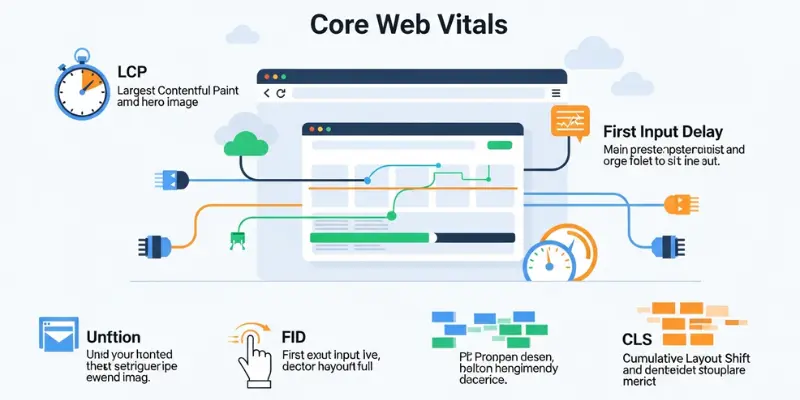
Core Web Vitals are three key performance measurements that show how well your website works for real people. They measure loading speed, how quickly your site responds to clicks, and whether page elements stay in place while loading.
- LCP (Largest Contentful Paint): Main content loads within 2.5 seconds
- INP (Interaction to Next Paint): Site responds to clicks within 200 milliseconds
- CLS (Cumulative Layout Shift): Elements stay stable, score below 0.1
- Measured from real Chrome browser users
- Affects Google Search rankings directly
Why Core Web Vitals Matter
Poor performance costs you visitors and money. Studies show 53% of mobile users leave websites that take over 3 seconds to load. Slow sites frustrate people, reduce sales, and hurt your brand. Google rewards fast websites with better search positions, bringing you more traffic.
- Better Google Search rankings
- Lower bounce rates, higher engagement
- More conversions and sales
- Better mobile user experience
- Competitive advantage over slower sites
Improving LCP: Faster Loading
Make your main content appear quickly by optimizing images, upgrading your server, and reducing file sizes.
- Optimize images: Use WebP format, compress files
- Use a CDN: Serve content from nearby servers
- Enable caching: Store files on user devices
- Minimize CSS/JavaScript: Remove unnecessary code
- Upgrade hosting: Choose faster servers
Optimizing INP: Quick Responses
Make your site respond instantly to clicks and interactions by reducing heavy JavaScript and optimizing code.
- Reduce JavaScript: Break up long-running scripts
- Defer non-critical code: Load only what’s needed
- Limit third-party scripts: Reduce tracking codes
- Use web workers: Move heavy tasks off the main thread
Fixing CLS: Stable Pages
Prevent annoying layout shifts by setting proper sizes and reserving space for content.
- Set image sizes: Always specify width and height
- Reserve ad space: Define container sizes early
- Preload fonts: Load custom fonts before displaying text
- Avoid dynamic inserts: Don’t add content above existing elements
Measuring Your Performance
Track your Core Web Vitals using free tools from Google to identify and fix problems before they hurt your rankings.
- Google Search Console: Real user performance data
- PageSpeed Insights: Detailed improvement suggestions
- Lighthouse: Built-in Chrome testing tool
- WebPageTest: Advanced performance analysis
Optimizing Core Web Vitals creates faster web experiences that satisfy users and search engines, leading to better rankings and business success.
API Technologies: REST vs GraphQL – Which Should You Use?
APIs (Application Programming Interfaces) connect different software applications and let them share data seamlessly. Every time you check the weather on your phone, post on Instagram, or shop on Amazon, APIs work behind the scenes. REST and GraphQL are today’s leading API technologies, and picking the right one impacts your app’s performance, flexibility, and how quickly you can build features.
What is a REST API?
REST (Representational State Transfer) has powered web services for over twenty years. Think of it like ordering from a restaurant menu where each item comes with predetermined ingredients. Major platforms like Twitter, Stripe, and GitHub rely on REST because it’s straightforward and dependable.
- Clear structure: Organized endpoints like /users or /products
- Standard methods: Uses GET, POST, PUT, DELETE
- Independent requests: Each call stands alone
- Cache-friendly: Stores responses for quicker access
- Universal compatibility: Supported by all modern tools
What is GraphQL?
GraphQL, developed by Facebook in 2015, takes a different approach by letting you specify exactly which information you want in one request. Rather than getting a preset combo meal, you customize your order completely. Netflix, Shopify, and PayPal adopted GraphQL for its precision and adaptability.
- Unified endpoint: One address handles everything
- Custom requests: Fetch only required fields
- Type safety: Defined schema with built-in validation
- Live updates: Native support for real-time data
- Smart fetching: Eliminates unnecessary information
Web Development Career Guide: Skills, Salary & Opportunities
Web development is one of the best career choices in technology today. With every business needing websites and apps, skilled developers are always in demand. Whether you’re a student thinking about your future or someone wanting to change careers, web development offers great pay, creative work, and the chance to work from anywhere in the world.
What Does a Web Developer Do?
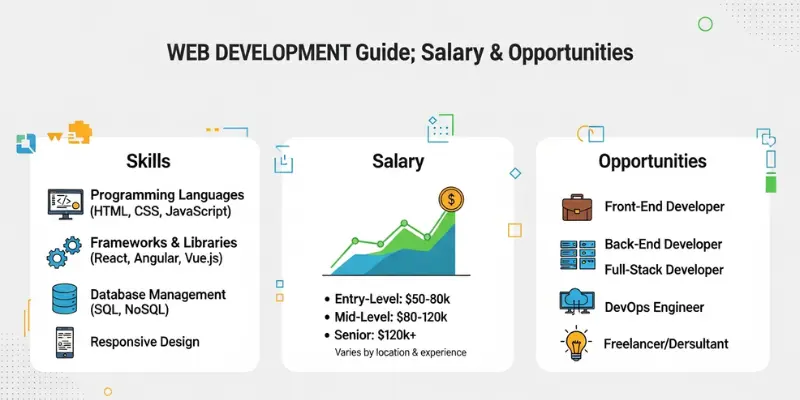
Web developers build the websites and apps you use every day. Frontend developers create everything you see and click on, like buttons, menus, and animations, using tools called HTML, CSS, and JavaScript. Backend developers work behind the scenes, managing databases and making sure everything runs smoothly with languages like Python or Node.js. Full-stack developers do both jobs, understanding how the whole website works from start to finish. During a typical workday, developers write code, fix problems, work with designers, test new features, and launch updates. The job mixes solving puzzles with being creative, turning ideas into real websites that people around the world might use.
Essential Skills You Need
Learning web development doesn’t require knowing everything at once. Start with HTML and CSS, which help you build and style webpages. Then learn JavaScript to make sites interactive and fun. You’ll also need Git and GitHub to save your work and collaborate with others. As you get better, learn a framework like React or Vue to build bigger projects faster. For backend work, pick a language like Python or Node.js and learn about databases like MySQL or MongoDB. Besides technical skills, you need to be good at solving problems, explaining ideas clearly, and learning new things on your own, since technology keeps changing.
Educational Paths and Learning Options
You don’t need a fancy college degree to become a web developer. Many successful developers taught themselves using free websites like freeCodeCamp and YouTube videos. Coding bootcamps are intensive programs lasting three to four months that teach you everything quickly. Traditional college degrees in Computer Science give you deep knowledge over four years. Online courses from sites like Udemy and Coursera let you learn at your own speed. Whatever path you choose, building real projects for your portfolio shows employers what you can actually do. Contributing to projects on GitHub proves you can work with other developers.
Salary Expectations in the USA
Web developers earn good money that grows with experience. Beginners with less than two years of experience make about $55,000 to $75,000 per year. Developers with two to five years of experience earn between $75,000 and $110,000. Senior developers with lots of experience make $110,000 to $160,000 or even more. Living in big tech cities like San Francisco or New York means higher pay, sometimes 20-40% more thanin smaller cities. But with remote work becoming normal, you can now earn good money while living anywhere. Freelance developers charge $50 to $200 per hour, depending on their skills. Big companies like Google and Amazon pay the most, but startups offer exciting opportunities too.
Career Growth Opportunities
Web development leads to many different career paths. You can become a senior developer leading big projects and helping new programmers learn. Tech leads make important decisions for whole teams. Engineering managers focus on managing people rather than writing code all day. Some developers specialize in making websites look beautiful or work super fast. Others become freelancers, working for themselves with different clients. Many developers eventually start their own companies, building apps and websites they dream up themselves. The skills you learn open doors to leadership roles, specialized work, or running your own business.
Job Market and Demand
Jobs for web developers are growing fast. The government predicts 16% more jobs by 2032, which is much faster than most careers. Every type of company needs web developers, from small local shops to huge companies like Netflix. Remote work means you can get jobs at companies anywhere in America without moving. Startups offer fast-paced, exciting work. Big corporations provide stable jobs with good benefits. The tech world connects globally, so you might work with people from different countries, making your job interesting and diverse.
Getting Your First Job
Getting your first developer job takes more than just knowing how to code. Build three to five real projects and put them on GitHub to show what you can do. Make your own website displaying your best work. Meet other developers at local events and connect with them on LinkedIn. Try getting an internship to gain experience, even if it doesn’t pay at first. Help with open source projects to show you can work with teams. Practice coding tests on websites like LeetCode. Remember that being friendly and communicating well matter just as much as coding skills. Apply to many jobs instead of waiting for the perfect one, because most job posts ask for more than they actually need.
Work Environment and Lifestyle
Web development gives you flexibility that many jobs don’t offer. Lots of companies let developers work from home completely. You focus on getting work done rather than sitting at a desk from nine to five. Some jobs mix office time with working from home. Startups feel casual and fast-moving. Big companies have more rules but clearer ways to advance. Freelancing lets you choose your own projects and schedule, though the pay can be less predictable. Most developers have a good work-life balance except when launching something new, making it a career you can stick with long-term.
Staying Current in a Fast-Moving Field
Technology changes quickly, but you don’t need to learn everything. Focus on getting really good at basics like JavaScript, HTML, and CSS because these always matter. Follow tech blogs and podcasts to know what’s happening without stress. Take new courses sometimes to learn popular frameworks. Build fun side projects to try new tools. Help other people learn, which makes your own knowledge stronger. Go to tech conferences when you can to meet other developers. Read the official guides for the tools you use. Balance learning new things with getting better at what you already know, instead of always starting over with something different.
Frequently Asked Questions About Web Technologies
Here are the most common questions people ask about web technologies, answered simply and clearly to help you understand how websites work and how to start your journey in web development.
Web technologies are the tools, languages, and frameworks used to build websites and applications. They include HTML, CSS, JavaScript, databases, and servers that work together to create the internet experiences we use daily.
Frontend is everything users see and interact with on a website, built with HTML, CSS, and JavaScript. Backend works behind the scenes, managing databases and servers using languages like Python, PHP, or Node.js.
JavaScript is the most versatile since it works for both frontend and backend. Python is great for beginners, while PHP powers most websites. The best choice depends on your project needs.
No, many successful developers are self-taught or attended coding bootcamps. What matters most is your skills, portfolio, and ability to solve problems, not necessarily a college degree.
With dedicated study, you can learn the basics in 3-6 months. Becoming job-ready typically takes 6-12 months of consistent practice and building projects for your portfolio.
Entry-level developers earn $55,000-$75,000 yearly. Mid-level developers make $75,000-$110,000, while senior developers earn $110,000-$160,000 or more, depending on location and experience.
Yes, web development offers excellent career prospects with 16% job growth projected through 2032. It provides good salaries, remote work options, and opportunities across all industries.
MySQL and PostgreSQL are excellent for structured data. MongoDB works well for flexible, document-based storage. The best choice depends on your data structure and scalability needs.
Conclusion
Web technologies have transformed how we live, work, and connect with the world. From the moment you wake up and check your phone to ordering food online or attending virtual classes, web technologies power nearly every digital interaction in our modern lives. Understanding these technologies opens doors to exciting career opportunities, creative projects, and the ability to build solutions that can reach millions of people worldwide.
Whether you’re just starting to explore HTML and CSS or mastering advanced frameworks like React and GraphQL, the journey of learning web development is both challenging and rewarding. The field continues to evolve with new tools, languages, and best practices emerging regularly, but the core principles remain constant: building fast, accessible, and user-friendly experiences that solve real problems. With dedication, practice, and curiosity, anyone can become a skilled web developer and contribute to shaping the future of the internet.






- Be Respectful
- Stay Relevant
- Stay Positive
- True Feedback
- Encourage Discussion
- Avoid Spamming
- No Fake News
- Don't Copy-Paste
- No Personal Attacks
- Be Respectful
- Stay Relevant
- Stay Positive
- True Feedback
- Encourage Discussion
- Avoid Spamming
- No Fake News
- Don't Copy-Paste
- No Personal Attacks
