Telemetry vs Telematics: Key Differences Explained
Published: 1 Dec 2025
“Telemetry” and “telematics” are words you may have heard if you work with cars, machines, or smart devices. They sound alike, and both involve moving data from one place to another, but they are not the same. Telemetry is the process of gathering data from a device or system and sending it to a central location for analysis and decision-making. Telematics is a system that uses GPS, sensors, and communication technology to track the location, performance, and behavior of vehicles and fleets. Understanding the differences between Telemetry vs Telematics is essential for making informed decisions.
What is telemetry?
In the context of technology, the terms Telemetry vs Telematics often come up, highlighting the distinctions and applications of each.
Telemetry is a way to get data from a device or system and send it to another place for monitoring. This information could be about the battery level, location, temperature, speed, pressure, errors, or performance. The main goal is simple: to know what’s going on without being there.
A simple breakdown of how telemetry works.
In this part, we will see each simple step of how telemetry collects data, sends it, and turns it into useful information
- Sensors gather information: they carefully monitor factors such as temperature, speed, pressure, and location. They turn changes in the real world into clear electrical or digital signals.
- Device collects sensor data: A small device or module consolidates sensor data into a single location. It checks the information and makes sure it can be sent without any problems.
- Data is cleaned and organized: The system checks the data for quality and ensures it is correct and complete. Thereafter, it organises the data clearly and simply.
- Data is encoded or compressed: The system converts the data into a compact, efficient format. This makes the data easier to send and lighter.
- Choose a way to talk:
The system picks the best way to send data, such as Wi-Fi, a mobile network, radio, or satellite. It picks the best option based on where you are and how far away you are.
- Data is sent over the network: The data moves safely from the remote device to a central server or the cloud. This operation can happen right away or at set times.
- Server receives and stores data: The central server or cloud gets data from many devices and stores it. It keeps the data in a database that is easy to use later.
- Software turns data into pictures: dashboards, charts, and graphs make the data easy to see. This makes it simple for users to see trends, patterns, and performance right away.
- Alerts and notifications go off:
The system watches the values and searches for changes that matter.
It sends the user a helpful alert or message when something needs their attention.
- People or systems take action: Users or automated systems use this information to make beneficial choices.
They can make settings better, work better, and keep everything running smoothly.
Where telemetry is used
In this part, we will look at the main areas where telemetry is used and how it helps people in real life
- Space and satellites:
Telemetry sends data from rockets and satellites back to Earth.
It helps engineers check health, position, and performance in space. - Hospitals and patient care:
Telemetry tracks heart rate, oxygen level, and other vital signs.
Doctors and nurses can watch patients from a distance and react quickly. - Cars and modern vehicles:
Many cars use telemetry to send engine and performance data to service centers.
This helps with remote checks, smart maintenance, and better safety. - Fleet and logistics management:
Telemetry is used in trucks, buses, and delivery vehicles.
It helps companies track location, fuel use, and driver behavior. - Factories and industrial machines:
Telemetry watches motors, pumps, and machines on the production line.
It helps detect problems early and reduces unplanned downtime. - Energy and utilities:
Power plants, grids, and pipelines use telemetry to monitor flow and usage.
It helps keep electricity, gas, and water running smoothly and safely. - IT systems and cloud services:
Software and servers send telemetry about errors, speed, and usage.
This helps IT teams improve performance and fix issues faster. - Smart homes and buildings:
Telemetry connects lights, thermostats, cameras, and sensors in buildings.
It helps control energy use, security, and comfort from anywhere. - Agriculture and farming:
Telemetry tracks soil moisture, weather, and machine status on farms.
Farmers use this data to water correctly, protect crops, and save costs. - Environmental monitoring:
Telemetry sends data from weather stations, rivers, and air quality sensors.
It helps scientists and governments understand climate, pollution, and risks. - Sports and wearables:
Fitness bands and sports trackers use telemetry to send live body data.
Athletes and users can see heart rate, steps, and performance in real time.
What is telematics?
Telematics is the use of telecom (communication) and informatics (data) to track and control moving things, like cars. It usually uses GPS, sensors, and the internet or mobile networks to gather information on location, speed, fuel consumption, and driver behavior. It then sends that information to a central system.
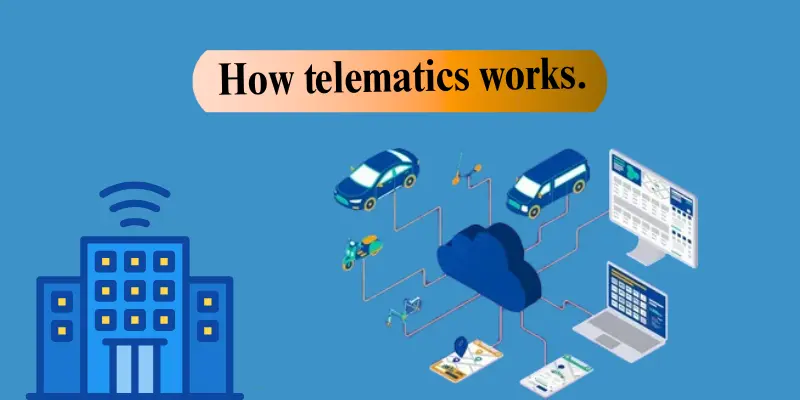
A simple breakdown of how telematics works.
In this part, we’ll walk through each simple step of how telematics collects data from vehicles, sends it, and turns it into useful insights.
- GPS and sensors collect data:
The vehicle’s GPS and sensors read things like location, speed, fuel level, and engine status.
They turn this information into digital data that the system can understand. - Telematics device gathers everything:
A small telematics device installed in the vehicle collects data from GPS and sensors.
It acts like a central box that brings all the information together. - Data is cleaned and organised:
The device checks the data for mistakes or missing values.
It then arranges the data in a simple, standard format. - Data is packed and prepared to send:
The system compresses or encodes the data to make it lighter.
This helps send it faster and use less network bandwidth. - Best network is selected:
The device chooses a way to send data, usually mobile network (SIM card) or sometimes Wi-Fi.
It picks the option that works best for that area and connection. - Data is sent to the cloud or server:
The telematics device sends the data from the vehicle to a central server or cloud platform.
This can happen in real time or at set time intervals. - Server receives and stores the data:
The central system receives data from many vehicles at the same time.
It saves everything in a database so it can be searched, filtered, and used later. - Platform turns data into maps and reports:
The telematics software shows the data on maps, dashboards, and simple charts.
Users can see routes, trips, fuel use, idle time, and driving patterns clearly. - Alerts and rules are applied:
The system checks the data against rules, like speed limits or geofences.
If something breaks a rule, it sends an alert by SMS, email, or app notification. - Managers or systems take action:
Fleet managers or automated tools use this information to make decisions.
They can change routes, plan maintenance, coach drivers, and reduce fuel and costs over time.
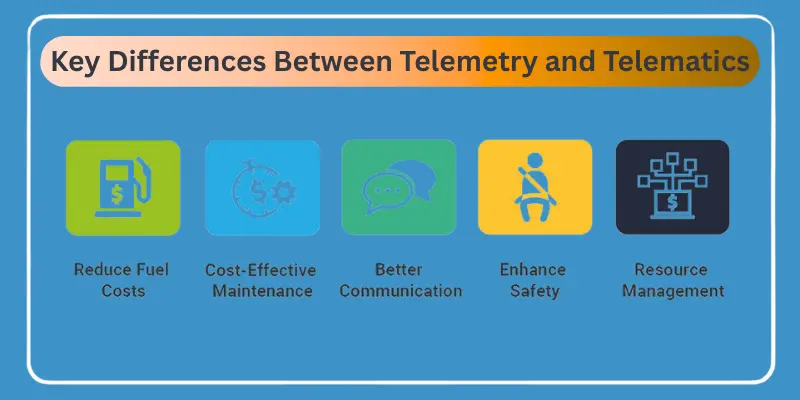
Key Differences Between Telemetry and Telematics
In this part, we will compare telemetry and telematics side by side so you can quickly see how they are different in real use.
- Main focus:
Telemetry focuses on sending data from any kind of device or system.
Telematics mainly focuses on vehicles and moving assets like cars, trucks, and vans. - Type of data:
Telemetry works with sensor data such as temperature, pressure, errors, and performance.
Telematics works with data like location, speed, routes, fuel use, and driver behavior. - Typical use cases:
Telemetry is common in factories, hospitals, power plants, and IT systems.
Telematics is common in logistics, delivery services, taxis, buses, and rental fleets. - Core technology:
Telemetry uses sensors plus a network to send data to a central system.
Telematics adds GPS, SIM-based mobile networks, and fleet software on top of telemetry. - Who uses it:
Telemetry is mostly used by engineers, technicians, IT teams, and operations staff.
Telematics is mostly used by fleet managers, dispatch teams, transport owners, and insurers. - Output and dashboards:
Telemetry dashboards often show technical graphs, system health, and alerts.
Telematics dashboards show maps, live vehicle positions, trips, and driver scorecards. - Setup and integration:
Telemetry systems are often custom-built and need more technical setup and integration.
Telematics systems are usually ready-made platforms with plug-and-play devices for vehicles. - Cost structure:
Telemetry costs depend on sensors, devices, networks, and custom software development.
Telematics often follows a per-vehicle model with hardware cost plus monthly subscription. - Scope and flexibility:
Telemetry can be used in many industries, from manufacturing to software to healthcare.
Telematics is more focused and optimized for transport, logistics, and field operations. - Business value:
Telemetry helps improve reliability, reduce downtime, and catch problems early in systems.
Telematics helps cut fuel costs, improve routing, increase safety, and control fleet performance.
When to Use Telemetry vs. Telematics
In this part, we’ll look at real-life situations to see when telemetry is the better choice, when telematics makes more sense, and how you can pick the right one for your needs.
Ideal Use-cases for Telemetry:
- Monitoring industrial machines:
Telemetry is ideal for watching motors, pumps, and production lines in real time.
It helps detect early faults, reduce downtime, and keep factories running smoothly.
- Remote equipment in hard-to-reach areas:
For devices in deserts, offshore rigs, or mountains, telemetry is a perfect fit.
It sends status data without needing someone to physically visit the site.
- Healthcare and patient monitoring:
Telemetry is used to track heart rate, oxygen, and other vital signs in hospitals.
Doctors and nurses can watch patients from a distance and act quickly if needed.
- Power plants and energy systems:
Telemetry is excellent for monitoring generators, grids, and renewable energy systems.
It helps balance load, avoid failures, and improve energy efficiency.
- IoT sensors in smart cities:
Streetlights, parking sensors, and pollution monitors use telemetry to send data.
City teams use this information to improve traffic, safety, and public services.
- Water, gas, and pipeline monitoring:
Telemetry is ideal for checking pressure, flow, and leaks in large networks.
It helps utility companies react early and avoid big damage or loss.
- Software, apps, and cloud services:
Telemetry tracks errors, crashes, speed, and usage of digital systems.
IT teams use this data to resolve issues faster and improve user experience.
- Environmental and weather stations:
Telemetry sends data from weather, river, and air quality sensors.
Scientists and agencies use it to study climate, predict risks, and warn people.
- Scientific research and experiments:
Labs and research projects use telemetry to collect data from tests and instruments.
It allows continuous measurement without manual checking every time.
- Aerospace and aviation systems:
Telemetry is used to monitor aircraft systems and test flights.
Engineers review this data to improve safety, performance, and design.
Ideal Use Cases for Telematics
- Delivery and logistics fleets:
Telematics is perfect for trucks, vans, and courier vehicles.
It helps track location, plan better routes, and deliver on time.
- Last-mile delivery services:
Companies doing food, grocery, or parcel delivery gain a lot from telematics.
They can reduce delays, avoid traffic, and send live updates to customers.
- Taxi, ride-hailing, and chauffeur services:
Telematics helps track each car in real time on a map.
Owners can check trips, improve safety, and stop vehicle misuse.
- Car rental and leasing companies:
Telematics lets rental firms see where cars are and how they are driven.
It helps prevent theft, control mileage, and charge fairly for use.
- Public transport and bus operations:
Bus operators can see if buses are on route and on schedule.
They can improve timing, reduce waiting time, and handle breakdowns faster.
- Field service and repair teams:
Companies with electricians, plumbers, or technicians on the road use telematics.
It helps send the nearest person to the job and reduce travel time.
- Construction and heavy equipment fleets:
Telematics tracks excavators, cranes, and loaders on large sites.
It shows machine usage and fuel use and helps stop idle running.
- Cold chain and refrigerated transport:
Telematics is ideal for trucks carrying medicines or frozen food.
It tracks both location and temperature to keep goods safe and compliant.
- Usage-based and commercial vehicle insurance:
Insurers use telematics to measure real driving behavior.
Safe drivers can get lower premiums based on their driving score.
- Emergency and rescue vehicles:
Ambulances, fire trucks, and police cars benefit from live tracking.
Control rooms can send the closest vehicle and choose the fastest route.
- Company cars and pool vehicles:
Businesses with shared cars can monitor trips and fuel use.
Telematics helps reduce misuse, control cost, and keep records of who used what.
Which One is Better for You?
Telemetry is best when you want to monitor machines, systems, or sensors. It suits engineers, technical teams, and companies that care about system health, performance, and early problem detection. If you manage factories, hospitals, energy systems, or software platforms, telemetry is your stronger choice.
Telematics is best when you want to manage vehicles and moving assets. It suits fleet managers, logistics teams, transport companies, and services that depend on cars, trucks, or buses. If you care about routes, fuel, driver behavior, and trip history, telematics gives you clear value.
For beginners and small businesses, telematics tools are often easier. Many platforms are ready-made and simple to use. You plug in the device, open the dashboard, and start tracking.
Frequently Asked Questions about Telemetry vs Telematics
Here are some common questions people ask when comparing telemetry and telematics.
Yes, you can say telematics is a special use of telemetry.
Telemetry is about sending data from any system. Telematics mainly uses this idea for vehicles and fleets.
Neither is “better” in general. Telemetry is better for machines and systems. Telematics is better for vehicles and transport.
Yes, many large companies use both.
They use telemetry to monitor equipment and telematics to manage their vehicles.
For telemetry, some technical or engineering knowledge helps.
For telematics, many tools are ready-made, so non-technical users can also use them.
No, even small businesses with a few vehicles can use telematics.
It still helps save fuel and time and prevent misuse.
No, telemetry is also used in hospitals, apps, cloud systems, and smart devices.
Any place that needs remote data and monitoring can use it.
Telematics tools are usually easier for beginners and small teams.
Telemetry is better if you have technical support or work with complex systems.
Most telematics systems need a mobile network or internet to send live data.
Some can store data offline and send it later when the network is back.
Conclusion
Telemetry and telematics both deal with remote data, but they serve different worlds. Telemetry looks after devices and equipment, sending back useful data about how they behave. Telematics focuses on vehicles, using location, sensor, and trip data to manage cars, trucks, and other moving assets.


- Be Respectful
- Stay Relevant
- Stay Positive
- True Feedback
- Encourage Discussion
- Avoid Spamming
- No Fake News
- Don't Copy-Paste
- No Personal Attacks
- Be Respectful
- Stay Relevant
- Stay Positive
- True Feedback
- Encourage Discussion
- Avoid Spamming
- No Fake News
- Don't Copy-Paste
- No Personal Attacks
