Green Web Solutions Eco Hosting for Businesses
Published: 6 Feb 2026
The Green Web is revolutionizing the digital world by promoting sustainable websites and eco-friendly hosting solutions. By leveraging renewable energy-powered servers, energy-efficient data centers, green cloud hosting, content delivery networks (CDNs), and optimized web design, businesses, developers, and digital marketers can reduce the carbon footprint of their online platforms.
Integrating Green Web principles helps organizations create high-performance, environmentally responsible websites that appeal to eco-conscious users, support corporate social responsibility (CSR), and align with global sustainability goals. Key technologies and practices include sustainable web design, green SEO strategies, smart analytics, and AI-driven optimization, all contributing to a greener and more efficient digital ecosystem.
What is the Green Web and Why Should You Care?
The Green Web refers to a movement in the tech world focused on making websites and online services more environmentally friendly. It involves using renewable energy sources, like wind and solar power, to run data centers, optimizing websites for energy efficiency, and supporting sustainable practices in web hosting.
Energy Consumption: As the internet grows, so does its energy use. Websites, apps, and online services consume a significant amount of electricity, much of which still comes from fossil fuels.
Reducing Environmental Impact: The Green Web aims to reduce this impact by promoting the use of renewable energy and optimizing website efficiency, helping to lower carbon emissions and fight climate change.
Sustainable Future: Supporting green technologies contributes to a more sustainable digital world and a healthier planet for future generations.
Benefits for Your Brand: Adopting eco-friendly practices can enhance your brand’s reputation and even lead to long-term cost savings.
You may also Like these posts
Tech on Dicas Simple Tech Tips to Simplify Your Life
Skibidi Tech Install Third-Party Apps on iOS Safely
Telemetry in Firefox: A Simple Guide for Users
The Environmental Impact of the Internet: How the Green Web Helps
The internet has become an essential part of our daily lives, but its environmental footprint is often overlooked. Every time we browse a website, stream a video, or use an online service, data must be processed and stored in data centers, which consume large amounts of energy. In fact, the internet accounts for about 2-3% of global electricity consumption, and a significant portion of this energy still comes from non-renewable sources like coal and natural gas.
This is where the Green Web comes in. By focusing on sustainable practices, the Green Web works to reduce the environmental impact of our online activities. It promotes:
- Renewable Energy: Green hosting companies use energy from wind, solar, and other renewable sources to power their servers.
- Energy-Efficient Websites: By designing websites that load faster and use less energy, we can reduce the overall power consumption.
- Carbon Offsetting: Many green web services invest in projects that help balance out their carbon emissions, making the internet a cleaner place.
By supporting the Green Web, we can reduce the internet’s carbon footprint, helping to fight climate change while still enjoying the benefits of a connected world.
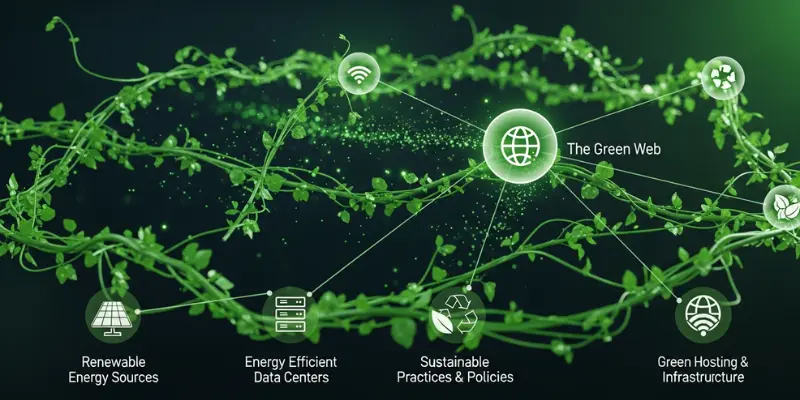
How Does the Green Web Work? Key Principles Explained
The Green Web focuses on reducing the environmental impact of the internet by promoting sustainable and energy-efficient practices. Here are the key principles that make it work:
Renewable Energy-Powered Hosting
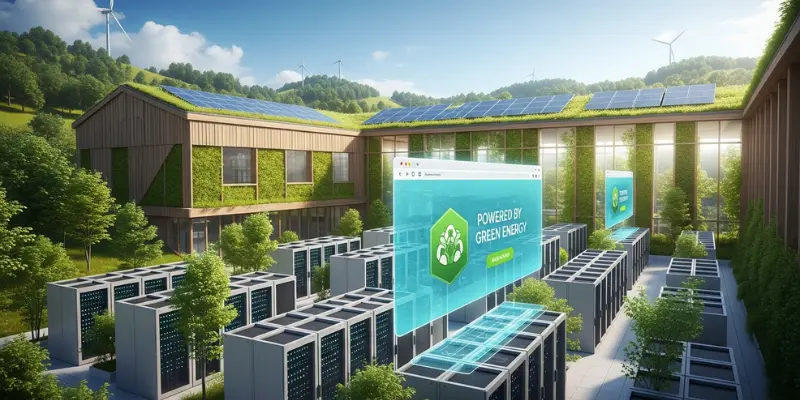
Green web hosting providers use energy from renewable sources like solar, wind, and hydroelectric power to run their data centers. Unlike traditional data centers that rely on fossil fuels, these green hosts reduce carbon emissions and help fight climate change.
Energy-Efficient Web Design
Websites can be designed to consume less energy by optimizing their speed and performance. Simple design elements, compressed images, and clean coding reduce the amount of power required to load a page. For example, faster websites need fewer server resources, leading to a lower environmental footprint.
Sustainable Data Centers
Data centers are the backbone of the internet, and many of them are making efforts to become more sustainable. This includes using cooling systems that reduce energy use and choosing locations where renewable energy is abundant. Some data centers also reuse heat generated by servers to warm nearby buildings.
Carbon Offsetting
For those companies that can’t eliminate their carbon emissions, carbon offset programs allow them to invest in projects that reduce or capture greenhouse gases, like reforestation or renewable energy initiatives. This helps neutralize their carbon footprint.
Sustainable Development Practices
The Green Web encourages companies to adopt sustainable practices across their entire business. This could include reducing waste, recycling old equipment, or using eco-friendly materials for physical infrastructure.
Benefits of Adopting a Green Web for Your Business and the Environment
Adopting the Green Web not only benefits the environment but also offers significant advantages for businesses. Here’s how going green can make a positive impact:
Reduced Environmental Impact
Green hosting and energy-efficient websites cut down on carbon emissions, helping the planet.
Improved Brand Image
Show customers you care about sustainability, building trust and loyalty.
Cost Savings Over Time
Green websites often lead to lower hosting costs and better performance, saving money.
4. Better User Experience
Faster, optimized sites offer a smoother experience, boosting engagement and satisfaction.
Alignment with CSR Goals
Going green aligns with your company’s social responsibility goals, attracting eco-conscious customers.
Future-Proofing Your Business
Stay ahead of regulations and demand for sustainable practices, positioning your business for growth.

How to Make Your Website Eco-Friendly: Easy Steps to Go Green
Making your website eco-friendly is easier than you might think. Here are simple steps to reduce your site’s environmental impact:
1. Choose Green Hosting
Opt for a hosting provider that uses renewable energy, like solar or wind power. Many green hosting companies already commit to reducing carbon emissions.
2. Optimize Your Website’s Performance
Improve your site’s speed and efficiency by:
- Compressing images.
- Minimizing code (HTML, CSS, JavaScript).
- Using caching to reduce server load.
3. Use Energy-Efficient Web Design
Design your site to be lightweight and simple. The less complex your site, the less energy it uses to load and run.
4. Implement Lazy Loading
This technique ensures images and content only load when needed, reducing the amount of data transferred and improving speed.
5. Enable HTTPS
Not only is HTTPS more secure, but it also improves site performance by compressing data during transfer, saving energy.
6. Reduce Data Storage
Keep your website’s data (images, videos, files) clean and organized. Delete outdated content to save server space and energy.
7. Monitor Your Website’s Energy Use
Use tools like Website Carbon Calculator to track how much energy your website uses and find areas to improve.
8. Offset Carbon Emissions
If possible, invest in carbon offset programs to neutralize your site’s emissions through environmental projects.
Top Green Web Hosting Providers to Power Your Website
Choosing a green hosting provider is a key step in making your website eco-friendly. Here are some of the top green web hosting companies that prioritize sustainability and use renewable energy:
- GreenGeeks
- SiteGround
- A2 Hosting
- HostPapa
- DreamHost
- TMDHosting
- WP Engine
- Bluehost (green energy-powered options)
- InMotion Hosting
- Eco Web Hosting
- Hostinger (commitment to sustainability)
- Kinsta (uses renewable energy)
Challenges of Transitioning to the Green Web: What to Know
While moving to the Green Web offers many benefits, the transition can come with a few challenges. Here are the key obstacles businesses may face:
Higher Initial Costs
Switching to green hosting and adopting energy-efficient practices may have a higher upfront cost. Renewable energy-powered hosting often comes at a premium, and redesigning websites for better performance requires time and investment.
Limited Green Hosting Options
Although the demand for green hosting is growing, not all web hosting providers offer eco-friendly services. It can sometimes be challenging to find a provider that meets both your sustainability goals and your technical needs.
Technical Complexity
Optimizing your website for energy efficiency might require technical expertise. Compressing files, reducing server load, and adopting performance-enhancing practices can be complex, especially for non-technical users.
Transitioning Existing Websites
If your website is large or has been running for a long time, optimizing it for the Green Web can take significant effort. You may need to redesign parts of your website, optimize code, or even migrate to a new hosting provider.
Ongoing Maintenance
Maintaining a green website isn’t a one-time effort. It requires constant monitoring and optimization. Staying up-to-date with the latest technologies and best practices for sustainability can be time-consuming.
Balancing Performance and Sustainability
Sometimes, making a website more energy-efficient can conflict with performance goals. For example, reducing image size or minimizing code might slightly impact loading speed. Finding the right balance between sustainability and user experience is crucial.
Lack of Awareness or Knowledge
Many businesses are still unaware of the importance of the Green Web or are unsure about how to start. Without the right knowledge, it can be difficult to take the first step toward sustainability.
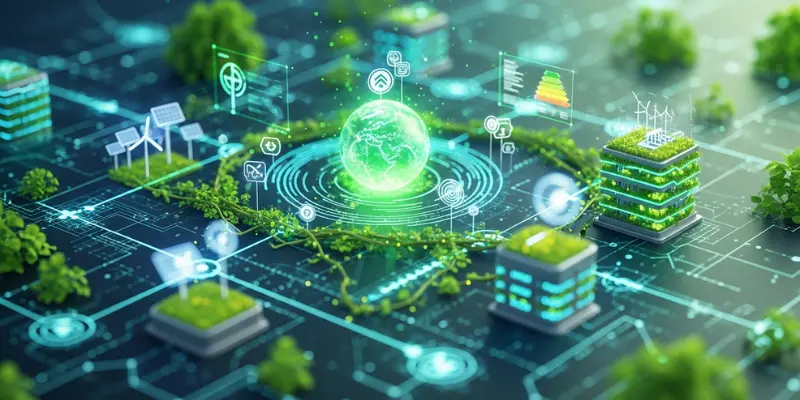
The Future of the Green Web: Trends and Innovations
As sustainability continues to take center stage in the tech world, the Green Web is evolving rapidly. Here’s a look at the trends and innovations shaping its future:
1. Increased Use of Renewable Energy
The future of the Green Web will see even more websites and data centers powered by renewable energy. Solar, wind, and hydroelectric power will become the norm, with tech giants leading the way in adopting clean energy solutions. As demand for green hosting grows, more providers will invest in renewable sources.
2. Energy-Efficient Web Design Becomes Standard
Designing energy-efficient websites will be a key trend moving forward. Faster loading times, reduced file sizes, and simpler designs that minimize energy consumption will become best practices for web developers. Tools to track and optimize a website’s energy use will become more accessible and sophisticated.
3. AI and Automation for Sustainability
Artificial intelligence (AI) will play a significant role in optimizing website performance for sustainability. AI can analyze user behavior, adjust server loads, and dynamically optimize content to reduce energy consumption. Automation tools will also help maintain energy-efficient websites without constant manual input.
4. Carbon-Neutral and Carbon-Free Hosting
More hosting providers will move towards carbon-neutral or even carbon-free hosting, going beyond simply using renewable energy. Many will invest in carbon offset programs or innovative solutions, like energy storage, to neutralize any emissions they can’t eliminate, pushing for a net-zero digital world.
5. Blockchain and Sustainability
The integration of blockchain technology in the Green Web could lead to new ways to track and verify sustainability efforts. Blockchain can be used to create transparent systems for monitoring energy consumption and carbon emissions across the internet, making the entire process more traceable and accountable.
6. Green Certifications and Standards
The rise of green certifications will help users easily identify eco-friendly websites and services. As more businesses focus on sustainability, clear standards and certification processes will emerge, guiding companies toward more responsible hosting and web practices.
7. Sustainable Web Development Education
As the Green Web grows, we’ll see a stronger emphasis on sustainability education within the tech community. More developers and designers will be trained on best practices for building and maintaining energy-efficient websites, making sustainable web development a mainstream skill.
8. Collaborations Between Tech Giants and Environmental Organizations
In the coming years, expect more collaborations between tech companies and environmental organizations. These partnerships will drive innovation in clean technologies and help push the Green Web movement forward, creating a more sustainable digital ecosystem.
Frequently Asked Questions About the Green Web
Curious about the Green Web? Here are some quick answers to the most common questions.
The Green Web refers to making websites, hosting, and online services more eco-friendly by using renewable energy, optimizing website efficiency, and reducing carbon footprints.
The internet consumes a lot of energy, much of it from non-renewable sources. The Green Web aims to reduce this impact, helping fight climate change and promote sustainability in the digital world.
You can make your website green by choosing a renewable energy-powered hosting provider, optimizing site performance, and reducing energy use through efficient web design and content management.
While green hosting can sometimes have a slightly higher upfront cost, it often leads to long-term savings through better performance, lower energy consumption, and improved brand reputation.
Carbon offsets are investments in projects like reforestation or renewable energy to balance out the emissions your website may generate, making your site carbon-neutral.
Yes! Tools like the Website Carbon Calculator help you measure your website’s carbon footprint and suggest ways to reduce its environmental impact.
Yes! Optimizing your site for energy efficiency can also improve loading speeds, user experience, and overall performance, leading to better engagement and lower bounce rates.
Conclusion
The Green Web is more than just a trend; it’s a crucial step toward creating a sustainable digital future. By embracing eco-friendly practices like renewable energy hosting, energy-efficient web design, and carbon offsetting, we can significantly reduce the environmental impact of the internet. Not only does going green help protect the planet, but it also offers benefits like improved website performance, cost savings, and a stronger brand image. The future of the internet is green, and by making small changes today, you can be part of that positive transformation.
You may also Like these posts
Web Digital Secrets: Transform Your Business Fast
Banca Web Pichincha: Simplifying Your Online Banking
West Palm Beach Web Design for Local Businesses






- Be Respectful
- Stay Relevant
- Stay Positive
- True Feedback
- Encourage Discussion
- Avoid Spamming
- No Fake News
- Don't Copy-Paste
- No Personal Attacks
- Be Respectful
- Stay Relevant
- Stay Positive
- True Feedback
- Encourage Discussion
- Avoid Spamming
- No Fake News
- Don't Copy-Paste
- No Personal Attacks
